// Step 01 - Understand
See biomechanics differently.
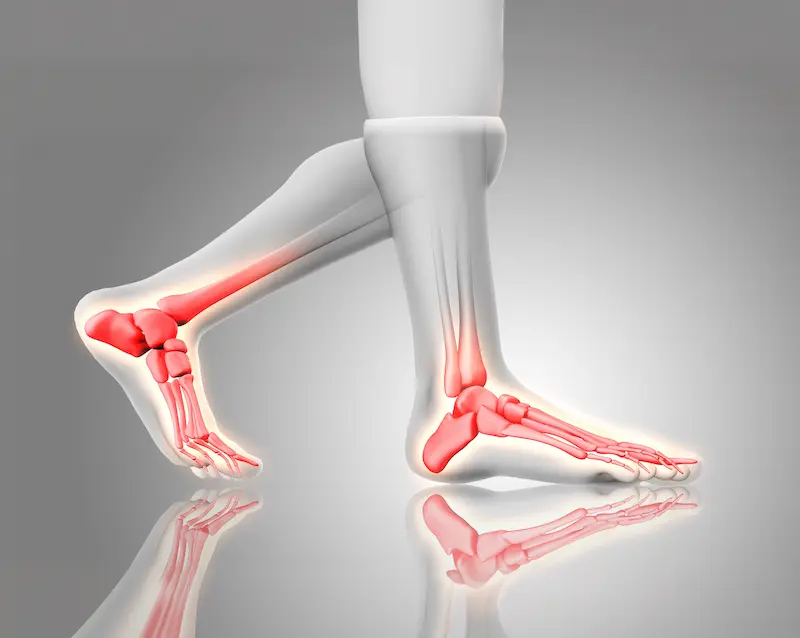
Deepen your understanding of anatomy, three-plane motion, mechanical instability, and the relationship
between the foot and the broader kinetic chain.
Anatomical foundations of the foot and ankle.
Three-plane motion and compensation patterns.
The kinetic chain as a diagnostic lens.
// Step 02 - Evaluate
Look beyond the chief complaint.
Evaluate how the patient functions instead of focusing exclusively on the painful structure. Learn to
identify mechanical instability and recognize a broader range of patients who may benefit from
biomechanical intervention.
Functional gait assessment and multi-joint evaluation.
Identifying silent mechanical dysfunctions early.
Expanded qualification criteria for orthotic intervention.
// Step 03 - Create
Take greater control of the orthotic you prescribe.
Learn the impression techniques, prescription principles, design considerations, fitting, adjustments,
and follow-up behind the Stride Logic approach.
Precise impression protocols and arch modeling.
Decisive prescription scripting without relying on labs.
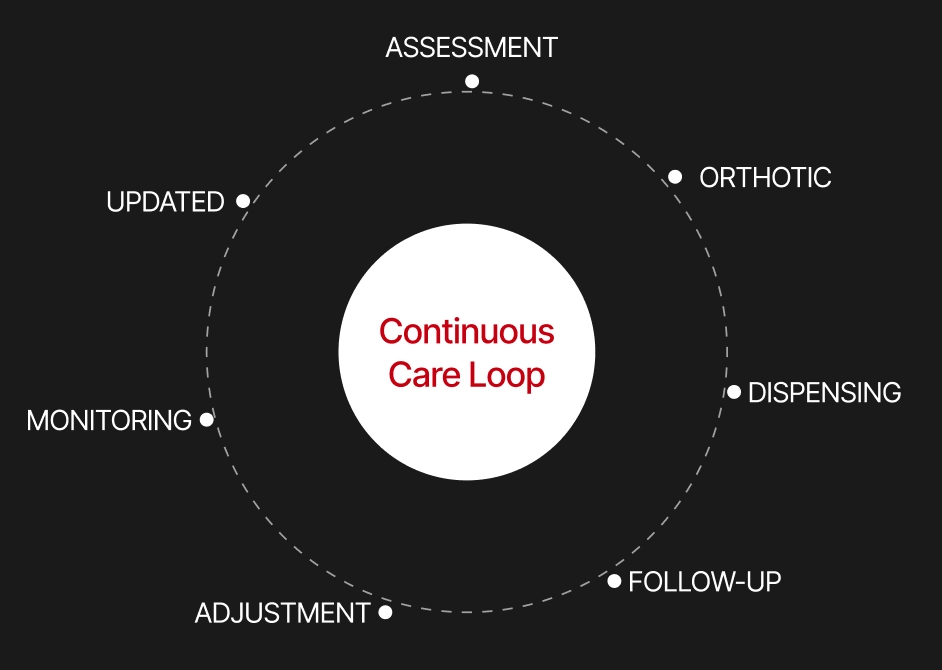
Clinical fitting, real-time adjustments, and follow-up.
// Step 04 - Communicate
Help patients understand the value of what you're providing.
Learn how to explain biomechanics, present your recommendation confidently, answer questions about cost,
and help patients see why their custom orthotics are different without turning the conversation into a
sales pitch.
Clear, non-technical biomechanical explanation frameworks.
Navigating financial and cash-pay discussions easily.
High patient compliance and value-driven acceptance.
// Step 05 - Implement
Turn clinical expertise into a repeatable practice system.
Bring everything together with the right pricing, team training, patient workflow, dispensing process,
follow-up, and accountability.
Standardized team delegation and patient intake workflows.
Streamlined delivery, verification, and recurring protocols.
Sustainable growth and trackable practice profitability.